What is Equipment Instance
In the Generic Inventory System (GIS), the Equipment System works with slot collection and equipment instance:
- You can use the inventory system’s slot collection (ItemSlotCollection) to add or remove items with equipment settings.
- The Equipment System listens for changes in the slot collection to generate or destroy equipment instances.
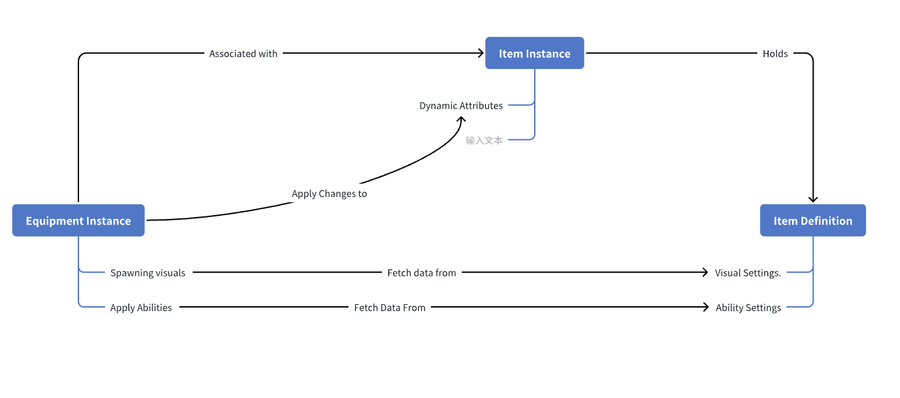
- Equipment instances handle the actual logic, such as:
- When an accessory is equipped, adding passive skills to the character based on the associated item’s skill configuration, and removing them when unequipped.
- When a weapon is equipped, spawning a weapon Actor from the associated item.
- When a weapon consumes ammo, updating the ammo count on the associated item instance (since items support saving and loading).
Equipment Interface
GIS offers high flexibility: any UObject or Actor implementing the GIS_EquipmentInterface interface can serve as an equipment instance.
Loading Blueprint
Initializing BlueprintUE renderer...
Equipment Instances
Default Equipment Instance
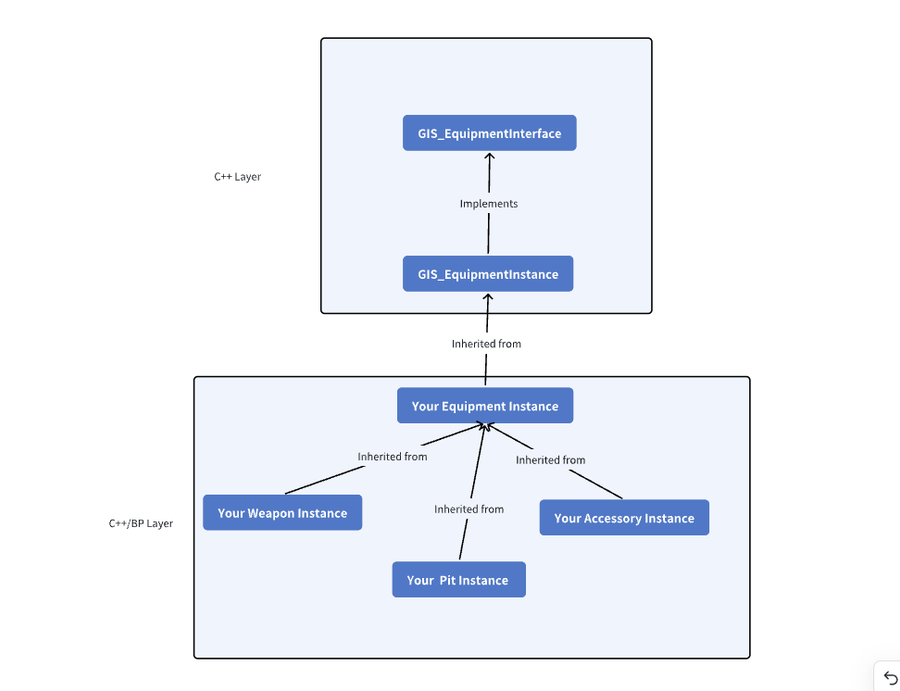
GIS provides a default UObject-based class, GIS_EquipmentInstance, which implements the GIS_EquipmentInterface interface.
It’s recommended to use this instance type and organize your structure as follows:
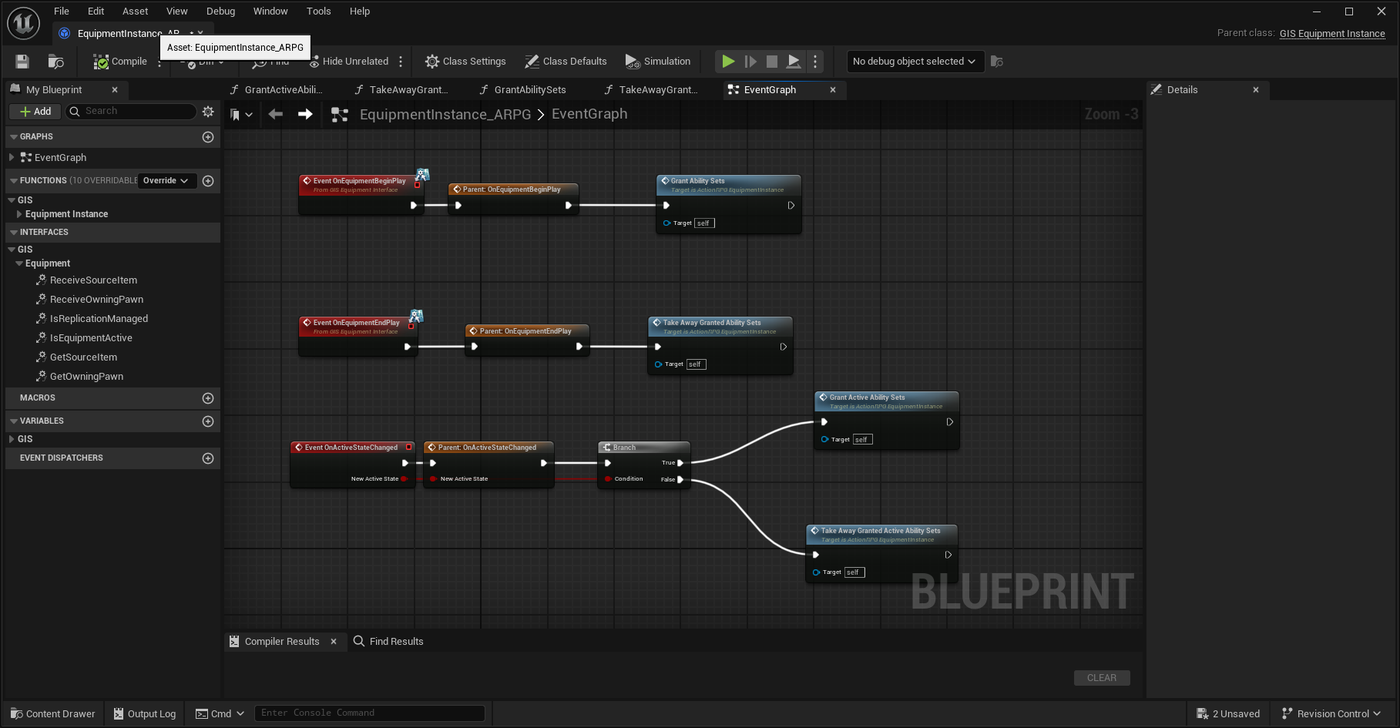
For example:Use EquipmentInstance_ARPG to encapsulate logic common to all equipment.
For example: For specific equipment (e.g., weapons), use WeaponInstance_ARPG to handle weapon-specific logic.
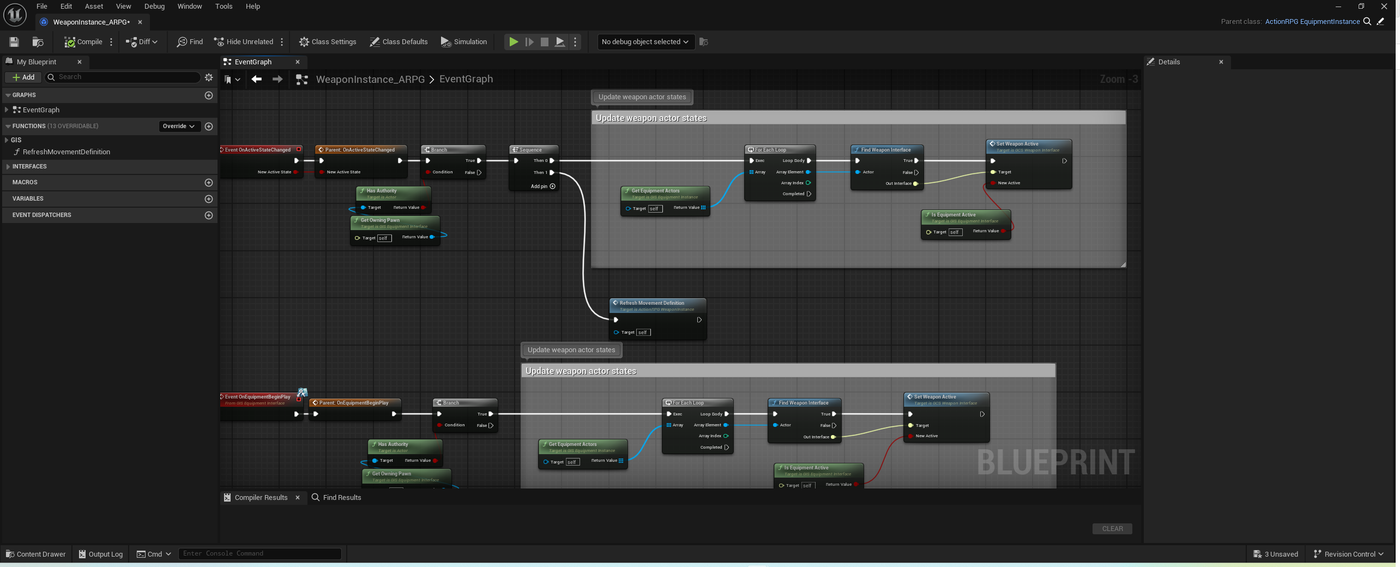
Actor-Based Equipment Instances
In some cases, using an Actor as an equipment instance is more efficient. For example:
- A SquadActor that spawns a group of NPCs to assist in combat.
- By implementing GIS_EquipmentInterface, NPCs are spawned in
OnEquipmentBeginPlayand destroyed inOnEquipmentEndPlay.
Note for network replication
Actor handle the replication it self, so make sure IsReplicationManagedreturn false while you are implment equipment interface.
Example
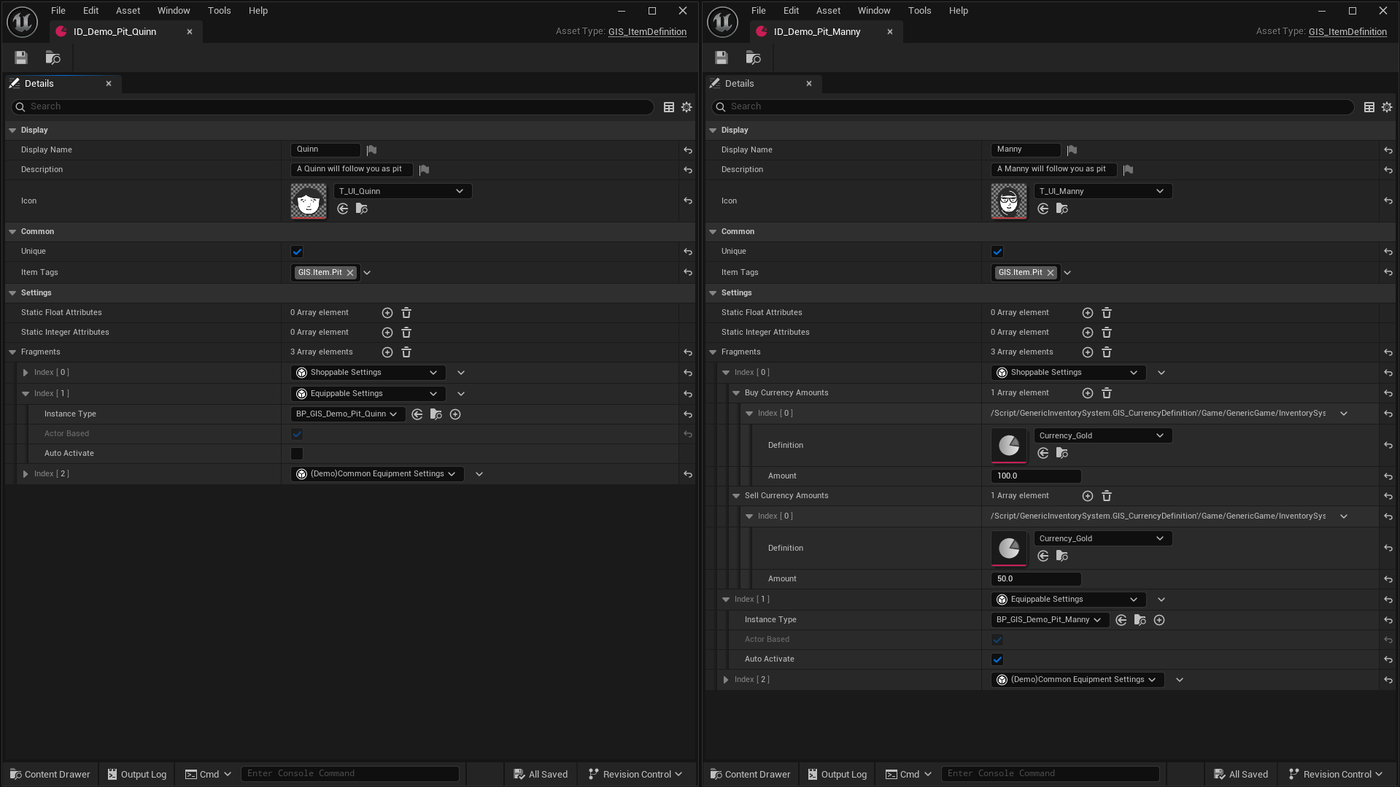
Manny and Quinn are set up as equipment instances, switchable between the “pet” equipment group.